

AI-powered website builders now make it possible to generate a site structure, content and, in some cases, a complete design in a matter of minutes. For many organisations, this speed presents a real opportunity: to launch a website at a lower cost, without needing to involve a technical team.
This simplicity really does save time… but what about the site’s development over time? Is creating a website using AI really a good idea? What are the limitations of these generators? What impact might they have on SEO, accessibility or the site’s consistency?
In this article, find out about the main limitations of websites created using AI and the key points to bear in mind before you get started.
Is it possible to create an entire website using AI?
Creating a website using AI may seem like the ideal solution: quick, inexpensive and accessible without any technical skills. Many tools promise to automatically generate pages, text, a site structure and even a complete design. This promise meets a real need: to quickly establish an online presence or test an idea without committing significant resources.
It is important to bear in mind, however, that this simplicity only applies to the starting point. As soon as the website goes live, the first difficulties may arise.
Let’s take a concrete example: a consultancy firm launches its website in October; the content is sound and the layout is acceptable. In December, the senior partner writes a «Our Approach» page herself to better reflect the firm’s positioning. In February, a new service is added using AI. In March, the blog launches with articles written in-house. The result: the website becomes a patchwork of disparate elements. Automatically generated pages sit alongside manually edited content, the tone of voice varies, and the navigation structure becomes confusing. The promises made on the homepage no longer matched the content on the inner pages. In short, the message became inconsistent.
This development reveals a mechanism that is rarely anticipated: AI makes it possible to generate content on a massive scale, which accelerates the accumulation of consistency issue. AI does not create digital coherence debt. It accelerates its accumulation by facilitating the rapid production of content and web pages that subsequently evolve according to different logic.
What is consistency debt?
Definition of the digital coherence debt
An accumulation of inconsistencies within a digital service, resulting from decisions taken without a holistic view. This manifests itself in fragmented user experiences, contradictory messages and rules for users that vary across pages or channels, making the service difficult to understand, use or trust. In the long term, it degrades the user experience, increases maintenance costs and hinders the product’s development. See the detailed definition.
This AI-related debt mechanism is structural. It stems neither from misuse of the tool nor from any specific technical fault. It arises from the very nature of generative AI: producing statistically probable content, within a context limited to the prompt and the model used at any given moment. This debt remains invisible whilst the site is receiving little traffic, but as soon as it becomes a genuine tool for building brand awareness, driving traffic, generating conversions or as a working tool, the inconsistencies cease to be merely anecdotal – particularly for the end user.
Why are websites created by AI becoming more difficult to update?
For organisations that combine a physical and digital presence, generating A site via AI can also accentuate a divide between the online experience and the in-store experience.
A user who discovers the AI-generated website and then walks through the door of the shop may find themselves faced with two distinct brand identities. A different tone of voice, promises that no longer match up, and a varying level of attention to detail. What the user reads online does not prepare them for what they will experience in-store, and vice versa.
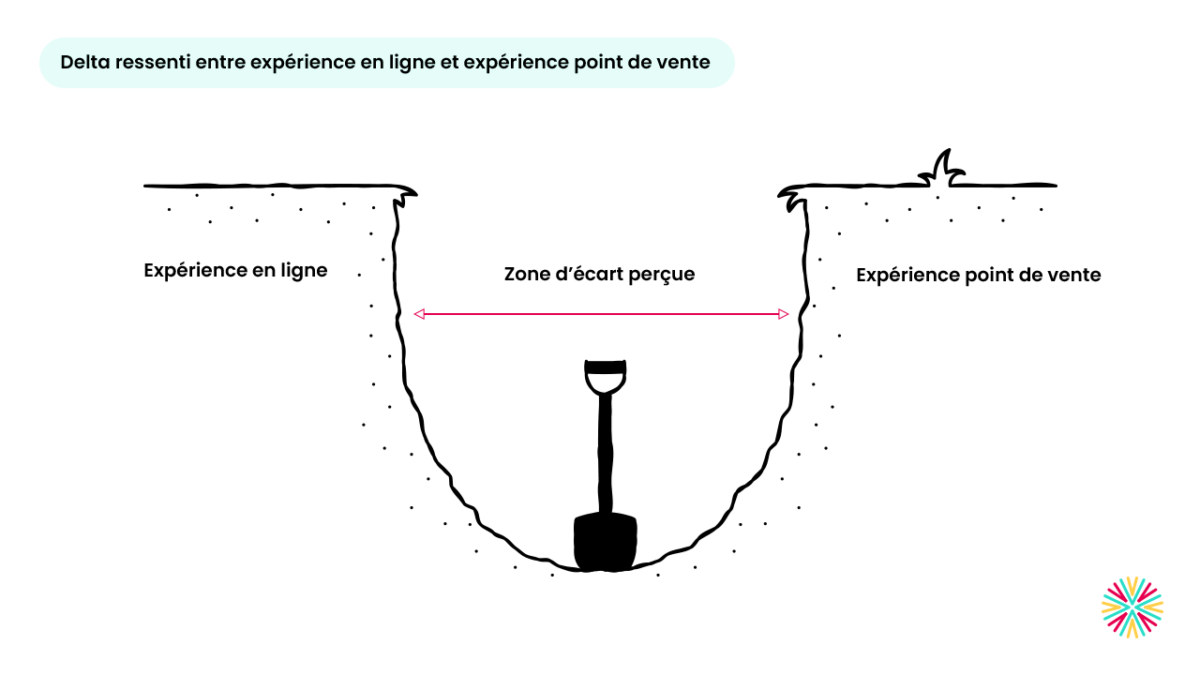
It is, above all, the standardisation of content and design templates linked to AI that poses a problem in this case: it dilutes an organisation’s distinctiveness.
Creating a website in a few clicks can give the illusion of rapid progress. But a website is an interface between an organisation and its users. He makes choices, trade-offs and has a way of understanding needs. AI is a fantastic tool for testing a prototype or taking a product to the next level, but in the long term, the human eye remains essential for steering the whole process over time.
What technical limitations should be anticipated with a website created by AI?
Over time, on sites generated entirely by AI, it becomes difficult to intervene without creating new imbalances. Modifying one page disorganises another, and adding content means reworking the whole thing to maintain logic. Some organisations end up calling for help to try and repair the structure, form and content - which, at At this stage, it is always costly and rarely fully satisfactory.
In addition to the impact on maintenance, the automatic generation approach generates other collateral damage. Take digital accessibility, It's an approach that runs through the whole design process. AI site generators often produce structures that appear compliant on the surface, but show inconsistencies as soon as they are tested with disabled users. These flaws are not obvious at first glance, but they exclude part of the audience and expose them to increasing legal risks.
As far as SEO is concerned, AI-generated sites produce surface-level technical SEO. They have not built up any editorial positioning: there is no reason for them to be quoted, shared or recommended. They don't generate qualified traffic, just traffic.
The same logic applies, an incoherent site attracts scattered traffic: visitors who are not always the right ones. Those who stay do not find a clear answer to their needs. Sometimes they fill in the contact form, but their expectations are unclear, out of sync or misinformed. Organisations spend time re-qualifying, re-explaining and re-framing. The website becomes a reverse filter: it attracts prospects who are not really aligned with the real offer.
In what circumstances is it a good idea to create a website using AI?
AI-powered website generators are particularly well suited to quickly producing an initial version of a website or testing out an idea. They enable you to create a prototype, validate a positioning strategy, showcase a start-up business, or quickly establish an online presence with a limited investment.
However, once the website becomes a strategic tool for visibility, customer acquisition or customer relations, requirements change. Content volumes increase, user journeys become more complex and multiple contributors are involved. The ability to maintain editorial, functional and visual consistency then becomes more important than the initial speed of content generation.
AI is therefore an excellent way to get a project off the ground. However, it does not replace the need for a long-term vision when the website is set to evolve over time.
Generative AI can be an accelerator Produce initial versions, explore avenues, quickly structure content.
But it doesn’t replace vision or the ability to make decisions. It guarantees neither consistency nor long-term relevance. A website isn't just a collection of pages. It's based on an overall logic, editorial continuity, and the ability to align content, user journeys, and intent. Without this structure, initial simplicity gradually gives way to complexity that is difficult to manage.