

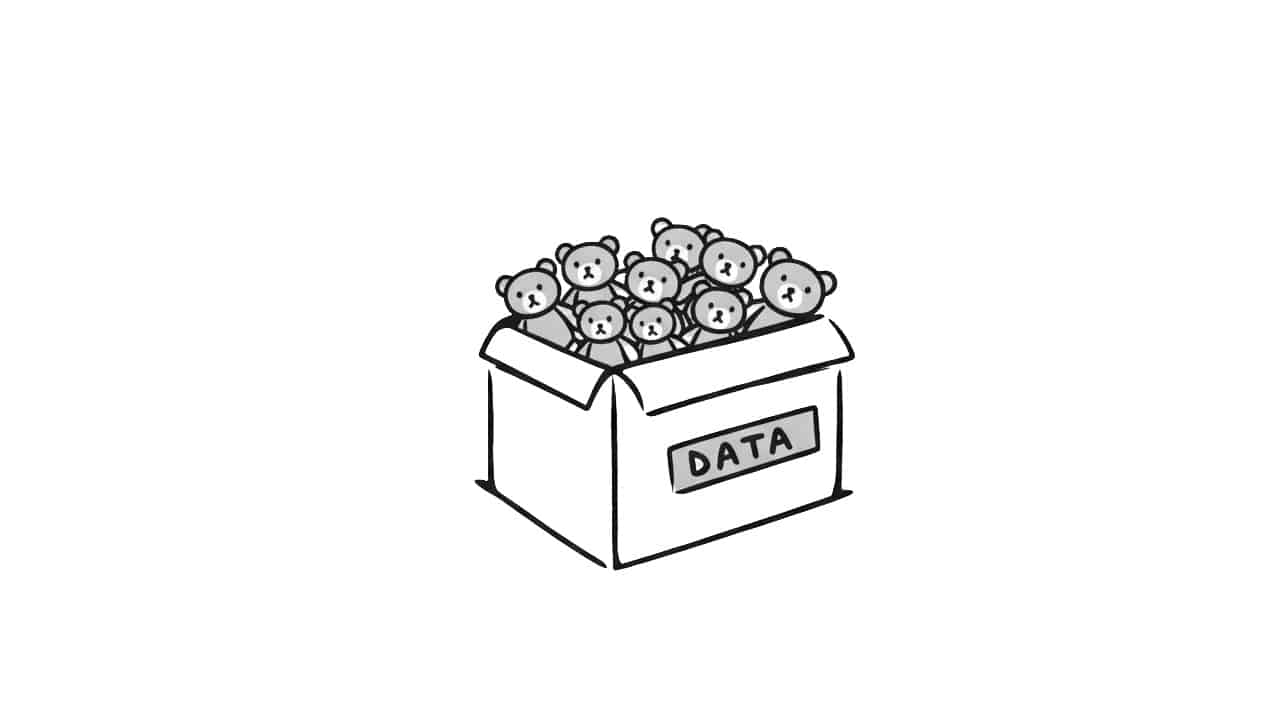
Organisations have never had so much data to drive their business. Dashboards, KPIs, analytics tools, Business Intelligence platforms, and artificial intelligence solutions are constantly producing new indicators intended to inform decisions.
Yet, a paradoxical situation appears in many organisations: the more data there is, the more difficult choices seem to become. Decisions are postponed, new indicators are requested, and discussions focus more on the figures than on the choices to be made. So, why do decisions sometimes become more difficult to make when there is more and more data?
The date, a new refuge
In many organisations, data has gradually become a way to secure decisions. A decision supported by figures appears more objective, more legitimate, and easier to defend than a choice based on conviction. Yet, this impression of neutrality is misleading. All data depends on a calculation method, an analytical scope, assumptions, and an interpretation. This search for security gradually modifies the role of data. In organisations, data is no longer used solely to understand a situation or to inform a choice. It can also be used to justify a decision already made, postpone a choice, avoid disagreement, or share responsibility for a decision. The debate then no longer focuses on the decision itself but on the indicators that accompany it.
This evolution explains the increasing importance placed on measurement. Dashboards are multiplying, new KPIs are emerging, and each project produces its own indicators. However, measuring more does not necessarily mean deciding better. When an indicator does not confirm the expected results, it is sometimes simpler to create a new one than to question the pursued objectives or the choices made. Measurement then ends up taking precedence over action.
The data can also become a means of delaying a decision. Requesting further analysis, waiting for a new set of results, or seeking additional statistical evidence are sometimes relevant steps. They can also postpone a judgment that will, in any case, have to be faced. No organisation has all the information before acting.
Data reduces some uncertainty. It never eliminates the need to make decisions. Every decision involves judgment, responsibility, and risk. It is this ability to make trade-offs that distinguishes a data-driven organisation from one that merely accumulates data.
What are the limitations of data?
Data is indeed a valuable decision-making tool. However, it cannot provide answers to all situations. Certain limitations arise when organisations assign it a role it cannot fulfil.
The first is due to its very nature: data describes what has happened, sometimes what is happening, but it never allows us to know the future with certainty. This limitation becomes particularly apparent when an organisation launches a new service, explores an unknown market, or faces disruption. In innovative contexts, historical data loses some of its value, and decisions rely as much on strategic vision as on available indicators.
All important dimensions also cannot be translated into figures. The quality of a user experience, the consistency of a digital journey, the trust placed in a brand, or the relevance of content are partly based on a qualitative assessment. Metrics provide useful benchmarks, but they do not replace the observation of usage, user feedback, or human analysis. Yet, it is these more difficult-to-measure dimensions that are often the most discussed within organisations.
Another limitation arises when indicators directly influence behaviours. As soon as a KPI becomes a target to be achieved, teams may be tempted to optimise the figure rather than the desired outcome. Decisions are then geared towards improving metrics rather than solving the initial problem. The data ceases to be a tool for observation and becomes a constraint that modifies the reality it is meant to measure.
How to regain arbitration capacity?
A number of levers can be used to correct the imbalance when data too often takes precedence over strategy and intuition. For example: limiting the number of indicators monitored to three or five critical dimensions clarifies priorities and reduces information noise. Defining explicit decision windows ensures that waiting for additional data does not become an excuse for inaction. Clarifying who decides what and within what framework strengthens the ability to act. The data can be shared, but the decision must be made by the people.
Here's how to tell if an organisation has become too reliant on data: * **When gut feelings are ignored:** If decisions are made purely on data without considering experience, intuition, or qualitative insights, it can be a sign of over-reliance. * **When data paralysis sets in:** An organisation might get stuck in a loop of collecting more data, analysing endlessly, and delaying decisions because the data isn't "perfect" or clearly dictates a single path. * **When data is seen as the only truth:** If data is treated as infallible and unchallenged, even when it might be flawed, incomplete, or misinterpreted, it's a red flag. * **When the "why" is lost:** Focusing solely on what the data says without understanding the underlying reasons or the broader context can lead to poor strategic choices. * **When experimentation is stifled:** If the fear of not having enough data or the need for absolute certainty prevents innovation and trying new things, it's a problem. * **When the wrong metrics are tracked:** An organisation might become obsessed with vanity metrics or indicators that don't truly reflect success or impact, simply because they are easy to measure. * **When data silos are not broken down:** If data is siloed within departments and not shared or integrated effectively, it might lead to incomplete pictures and conflicting insights. * **When the cost of data outweighs the benefit:** If significant resources (time, money, personnel) are poured into data initiatives without a clear return on investment or a tangible improvement in outcomes. * **When human interaction and relationships suffer:** If data-driven customer service or internal communications become impersonal and neglect the human element, it can signal an imbalance. * **When questions are framed by available data, not by business needs:** Instead of asking "what do we need to know to solve this problem?", the question becomes "what does the data we have tell us?".
There are a number of signs that can be used to identify an organisation where measurement has taken precedence over decision-making. When arbitration decisions are systematically postponed on the grounds that additional data is lacking This is one. When this pattern repeats cycle after cycle, without additional information substantially altering the situation, it indicates an inability to make decisions in the face of uncertainty.
Delegating decision-making responsibility to tools is also a real scourge within organisations. When trade-offs are systematically attributed to an algorithm, a predictive model or a scoring system, this often reflects a lack of accountability that makes it possible to avoid taking responsibility for choices and consequences.
The continual addition of KPIs, dashboards and tracking tools is also a sign of the company's commitment to its customers.’confusion between monitoring and steering. The more indicators are multiplied, the more the hierarchy of priorities becomes illegible. This proliferation often masks a lack of clear vision of what really counts.
Testing minor variants of an interface or a route is a legitimate practice, but it is not the only one. when any design decision, even a fundamental one, is subject to experimental validation, it reveals an inability to accept a bias editorial or strategic.
A mature organisation regularly questions the validity of its measurement conventions and challenges established metrics. When an indicator becomes sacred, when it structures management rituals without ever being questioned as to its relevance or its induced effects, it ceases to be a tool and becomes a dogma.
The initial question as to whether data and intuition should be opposed poses a false dilemma. Data and intuition are not opposites, they complement each other in a coherent decision-making process. Data is objective, intuition is guiding, decision making is decisive. The problem lies not in the use of measurement, but in transforming it into an organisational refuge that avoids commitment.
Decision-making maturity is not measured by the volume of data mobilised, but by the ability to make decisions in a context of imperfect information and to assume the consequences of its choices.