


Resources and exploration space -

 
9 December 2025

Is AI really going to replace jobs in business?

The idea that AI will enable us to produce more and do without many human skills has spread with astonishing speed. It's a cultural narrative, a form of progressive contagion that extends well beyond the IT framework to permeate all professional conversations, internal arbitrations and sometimes even recruitment policies. Yet transformation has never meant replacement, and reducing tasks has never meant losing value.
30 November 2025

Artificial intelligence can lead to poor business decisions for several reasons: * **Flawed Data:** AI systems learn from the data they are trained on. If this data is incomplete, biased, or inaccurate, the AI will make decisions based on this flawed information, leading to suboptimal outcomes. For example, if historical sales data has a bias against a particular demographic, an AI trained on this data might perpetuate that bias in future sales predictions. * **Lack of Context and Nuance:** AI algorithms are typically designed to identify patterns and make predictions based on quantifiable data. They often struggle to understand the broader business context, ethical considerations, or the subtle nuances that human decision-makers can grasp. This can lead to decisions that are logically sound based on the data but entirely impractical or detrimental in the real world. * **Over-reliance and 'Black Box' Problem:** Businesses might become overly reliant on AI recommendations without fully understanding how the AI arrived at its conclusions. If the AI's decision-making process is a "black box" (meaning it's opaque and difficult to interpret), it can be challenging to identify errors or to override the AI when human judgment suggests a different course of action. * **Inability to Adapt to Unforeseen Circumstances:** AI models are trained on past data and may not be equipped to handle entirely new or unforeseen market conditions, disruptions, or "black swan" events. Human intuition and adaptability are often crucial in such situations, and an AI might continue to make decisions based on outdated patterns. * **Ethical and Social Biases:** AI can inadvertently amplify existing societal biases present in the training data. This can lead to unfair or discriminatory decisions in areas like hiring, loan applications, or customer service, resulting in reputational damage and legal issues for the company. * **Misinterpretation of Results:** Business leaders might misinterpret the output of an AI. They might take its predictions as absolute truths rather than probabilities or recommendations, leading to incorrect strategic choices. * **Security and Manipulation Risks:** AI systems can be vulnerable to adversarial attacks, where malicious actors intentionally feed them manipulated data to trick them into making bad decisions. * **Costly Implementation and Maintenance:** While not directly a decision-making flaw, the significant cost and complexity of implementing and maintaining AI systems can sometimes outweigh the benefits if not managed effectively, leading to poor resource allocation decisions. Essentially, AI is a powerful tool, but without human oversight, critical thinking, and a deep understanding of its limitations, it can become a source of poor business decisions rather than a driver of success.

There's that strange moment that almost all of us have experienced recently with ChatGPT or another AI. That moment when the machine formulates an answer so accurate, so nuanced, that we lend it a form of humanity. Why does AI give us the impression that it understands? An analysis of the great misunderstanding that leads us to project intention and intelligence onto statistical systems.
24 November 2025

Digital accessibility: why user barriers remain invisible to teams

The obstacles that really block users are not the ones we notice. We evaluate a site in the same way as we evaluate a shop window by what we can see, but these elements are only the tip of a much larger whole, a technical and perceptive underground that many people will never explore.
14 November 2025

Digital Accessibility: Definition, Stakes and Obligations for Organisations

On 28 June 2025, European Directive 2019/882 on accessibility requirements for products and services came into force. A real lever for equal rights and opportunities, this text is intended to reflect the political will to make accessibility a pillar of citizenship. But what are we really talking about when we use the terminology of digital accessibility?
7 November 2025

Website redesign: why most projects start with the wrong questions

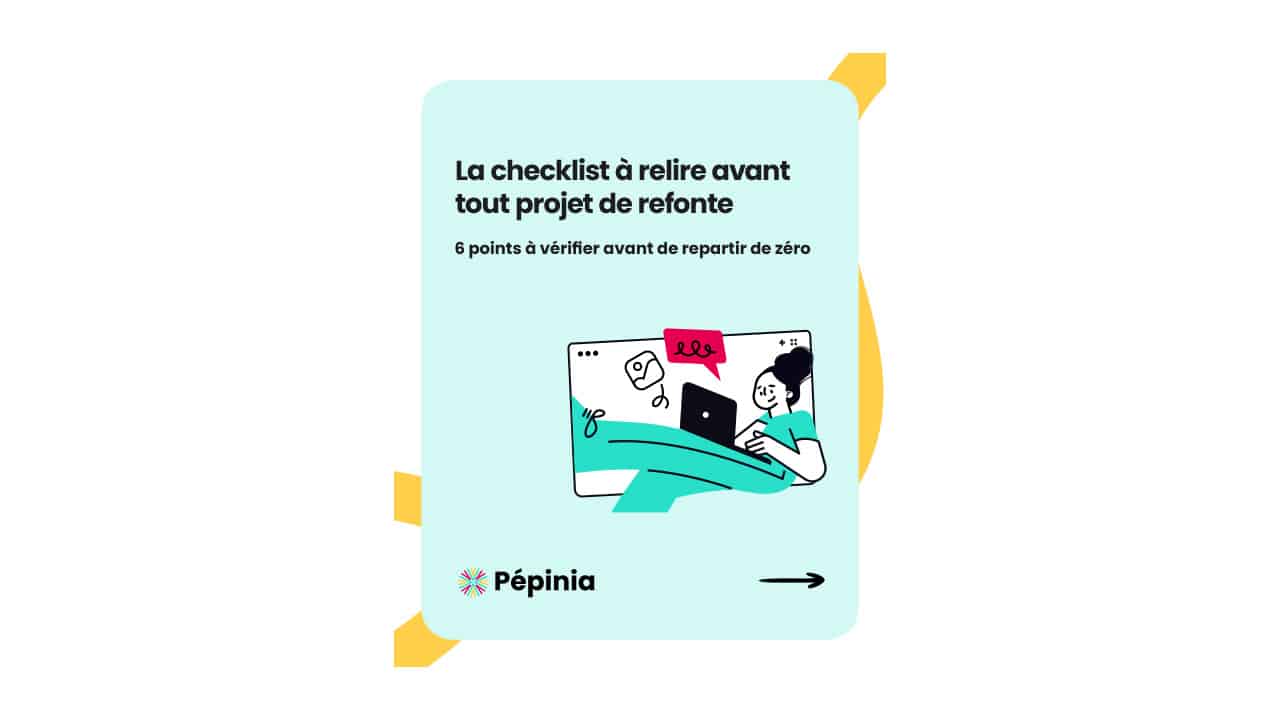
The redesign of a digital medium is never just a technical project: it's a mirror. It shows how a company works, where it falters, what it really values and what it neglects. So before you break everything and start again from scratch, here's the checklist I use before any redesign project.
4 November 2025

Digital accessibility in healthcare: obligations, risks and challenges for establishments

Digital health promises to bring patients closer to care. But in all the talk of innovation, haven't we forgotten one essential thing: access? Digital technology should be repairing inequalities in access, but it is sometimes creating new ones.
4 November 2025

E-commerce: why accessibility must become a performance indicator

In France, the e-commerce podiums have become a media ritual. But behind these trophies of modernity and conversion records, one essential question almost always remains unanswered: “Are these platforms really accessible to everyone?”

Pépinia's coffee break

A short newsletter to read over a cup of coffee and take a step back from the digital world, user experience, accessibility and quality of service.